A few years ago a friend of mine told me that he had recently started reading the Fathers of the Church, which, he said, made him feel like "the great slacker of the world."
I had a similar feeling as I read The Soul of the Apostolate a few years back.
This is the effect that good spiritual reading ought to have on us. From it, we learn from holy people (that is, people who are fiercely serious about loving God and one another, along with the Church, Scripture, and Tradition, who are indefatigably committed to prayer and the Sacraments, and who know a thing or two about self-mastery thanks to regular and rigorous penance and mortification) what, with God's grace, we are capable of, and what He put us on this earth to do.
Good spiritual reading also reminds of our own pathetic brokenness, and how far we presently are from reaching a point anywhere close to that reached by the spiritual masters whose works we read.
Sure, no one likes to be reminded of his faults and imperfections, but we periodically need to remind ourselves (or have someone else remind us) of how not-so-good we are, lest we get a little too comfortable with ourselves and become -- God forbid -- proud.
With this in mind, consider these words of Servant of God Dorothy Day, whose death 31 years ago was commemorated yesterday:
“I really only love God as much as I love the person I love the least.”
These words are as good a reality check as any we're likely to come across today. We would all do well to look deep within ourselves and honestly ask:
How much do I really love God?
Showing posts with label Sin. Show all posts
Showing posts with label Sin. Show all posts
Wednesday, November 30, 2011

Friday, March 25, 2011
It's No Coincidence That the Ring Is Destroyed on March 25
What with today's being the feast of the Annunciation, I figured it would be as good a day as any to post an excerpt from this article by the ever interesting Joseph Pearce, who explains why, despite the persistent protestations of some skeptics, The Lord of the Rings is a fundamentally religious and Catholic work — which, I suppose, is a bit like shooting fish in a barrel, since Tolkien himself said LotR is, you know, "a fundamentally religious and Catholic work."
If, however, Christ is never mentioned by name in The Lord of the Rings, how can we discern his invisible presence?
The most obvious parallel between Tolkien's myth and the Christian truth it reflects so faithfully is in the nature of the quest which constitutes the principal animus of Tolkien's story. The journey of Frodo and Sam into the very heart of Mordor in order to destroy, or unmake, the Ring in the fires of Mt. Doom is emblematic of the Christian's imitation of Christ in carrying the cross of sin.
At its most profound level, The Lord of the Rings is a sublimely mystical passion play. The carrying of the ring — the emblem of sin — is the carrying of the cross. This is the ultimate applicability of The Lord of the Rings — that we have to lose our life in order to gain it; that unless we die we cannot live; that we must all take up our cross and follow him.
All of this would be deducible from the story itself but Tolkien makes the parallel even more explicit. "I should say," he wrote, explaining the final climactic moments on Mt. Doom, "that within the mode of the story [it] exemplifies (an aspect of) the familiar words: 'Forgive us our trespasses as we forgive them that trespass against us. Lead us not into temptation but deliver us from evil.'"
As if this were not enough to silence those skeptics who obstinately refuse to acknowledge the overriding Christian dimension in The Lord of the Rings, Tolkien makes it even more unmistakable, and unavoidable, in the fact that the climactic attempt to destroy the ring, and in consequence the Dark Lord who had forged it, occurred on "the twenty-fifth of March."
The significance of this date will not escape the attention of Catholic scholars, though it is certainly overlooked all too often by Tolkien's non-Christian admirers. Tom Shippey, an Anglo-Saxon scholar and Tolkien expert, states in his book, The Road to Middle Earth, that in "Anglo-Saxon belief, and in European popular tradition both before and after that, March 25 is the date of the Crucifixion." It is also, of course, the Feast of the Annunciation, the celebration of the absolute center of all history as the moment when God himself became incarnate as man.
A Catholic and an Oxford don, Tolkien was well aware of the significance of "the twenty-fifth of March." It signified the way in which God had "unmade" the Fall, which, like the Ring, had brought humanity under the sway of "the Shadow." If the ring that the hero wants "unmade" at the culmination of Tolkien's quest is the "one ring to rule them all, and in the darkness bind them," the Fall was the "one sin to rule them all, and in the darkness bind them." On March 25, the one sin, like the one ring, had been "unmade," destroying the power of the Dark Lord.
Wednesday, April 22, 2009
Oh, the Hubris!
Sean Dailey wrote yesterday about what he called — quite rightly, in all possibility — "the most clueless sentence of the last decade", which appeared in an article in the current issue of Newsweek, titled "Sexual Masters of the Universe":
Oh, the hubris!
Contrast that last sentence with this excerpt from an article that appeared in an article in First Things last year:
One commenter, the sui generis Blog Nerd, noted:
Quite so.
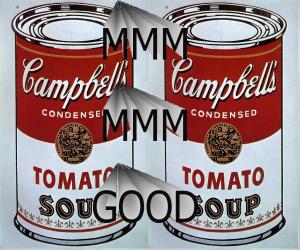
I remember hearing Scott Hahn give a talk a few years ago on the Church's teachings about sex. He pointed out that it's not enough to speak of sex as "good"; after all, that puts it at merely the same level as Campbell's soup. Neither is it enough to speak of sex as "great", for that puts it at merely the same level as Frosted Flakes.
Nay, so much more than "good" or "great", sex is holy, because by it and it alone, husband and wife express complete and total self-sacrificing, self-donating mutual love in a way that uniquely allows human beings to reflect the inner life of God.
If one believes sex to be anything less, he gets it hopelessly wrong.
The article, by a fellow named Andrew Romano, is about Bill Masters and Virginia Johnson, the Masters & Johnson of Sexual Revolution fame, using a new biography of the pair, Masters of Sex by Thomas Maier, as a springboard.
Anyway, early in the article, Romano drops this bomb, "As the story of Masters and Johnson makes clear, rescuing sex from the ancient mists of myth, mystery and religiosity left America a happier and healthier place."
Oh, the hubris!
Contrast that last sentence with this excerpt from an article that appeared in an article in First Things last year:
When I’ve taken retreats to Catholic monasteries, I’ve been aware of how surprisingly, and even frighteningly, erotic they seem. The Trappists of Mepkin Abbey in Moncks Corner, South Carolina, worship in an exquisitely beautiful place: high white walls, cold stone floors, a slit in the side of the main sanctuary like a split in the universe through which the reserved sacrament is always visible. The great stone altar is big enough to sacrifice Isaac on. Candles flicker on the bronze face of Our Lady during Compline, and dozens of men chant the Salve Regina before the abbot dismisses with a flick of his wrist and a sprinkling of holy water. Pure desire for God could be wrung from the place like a wet towel. And one can begin to see how sex with another person could be given up for desire for God or made better by mutual longing for God.
There are treasures here with which we can become reacquainted to combat pornography, if we dare. And we may not: Moderns flinch when St. Bernard of Clairveaux seeks to progress up Jesus’ body, kissing his way up to his lips; when Bernini sculpts St. Theresa in the posture of orgasm; when ancient Christians stripped and spit and had their faces hissed at in exorcism before submerging, nude, to be born again.
One commenter, the sui generis Blog Nerd, noted:
Eros, demasked, has once again fled. And now we are left with a religion slowly divested of its blood and guts.
It is no coincidence that the sensual opulence of our Churches started to disappear at the same time as the sexual revolution gathered its strength. The advent of casual contraceptive sex dissipated us. And we lost that longing ache for union in proper order.
When the uninitiated glimpse the erotics of religious ardor in traditional Catholicism they mistake it for "repressed sexuality" -- they couldn't be more wrong if they tried.
Quite so.
I remember hearing Scott Hahn give a talk a few years ago on the Church's teachings about sex. He pointed out that it's not enough to speak of sex as "good"; after all, that puts it at merely the same level as Campbell's soup. Neither is it enough to speak of sex as "great", for that puts it at merely the same level as Frosted Flakes.
Nay, so much more than "good" or "great", sex is holy, because by it and it alone, husband and wife express complete and total self-sacrificing, self-donating mutual love in a way that uniquely allows human beings to reflect the inner life of God.
If one believes sex to be anything less, he gets it hopelessly wrong.
Tuesday, April 14, 2009
SoulWow
When it comes to evangelization, I'm a big believer in meeting people where they're at.
That's why I think this* is an absolutely brilliant ad campaign:
Now, for the important question: Is it working?
Yes:
* See the ShamWow ad that this ad spoofs here.
That's why I think this* is an absolutely brilliant ad campaign:
Now, for the important question: Is it working?
Yes:
Officials in the dioceses of Brooklyn and Rockville Centre acknowledge the piece is a bit "edgy," but they say they needed to grab Catholics' attention to get them back into the confessional booth - especially during Holy Week...
The newly released "Soul Wow" video was a hit, church officials said, and along with a companion print and radio campaign has helped boost the number of people who went to confession during Holy Week this year. The two dioceses sponsored the campaign jointly.
"Confessions were very, very heavy," said the Rev. Kieran Harrington of the Diocese of Brooklyn. "We feel it was very successful."
Like Brooklyn, the Diocese of Rockville Centre, home to 1 1/2 million Catholics, does not keep precise statistics on the number of people attending confession. But officials also said anecdotal evidence indicated a sharp uptick this year. [emphasis added]
* See the ShamWow ad that this ad spoofs here.
Friday, August 22, 2008
Very Sad
There's a powerful story recently in the Daily Mail about Elizabeth Cameron (a pseudonym) who was raped at age 16, became pregnant, and despite everyone except her mother trying to convince her to have an abortion, kept her baby.
Perhaps the saddest part of the article is this:
Perhaps the saddest part of the article is this:
Very few people know the truth of how Phoebe [Elizabeth's daughter] came to exist. Unfortunately, in their community, it is assumed that she is just another youngster who got pregnant through carelessness, foolishness or deliberate willfulness.
'At college, one of my tutors even asked if I'd got pregnant deliberately so I could get a council flat.'
Her mother shakes her head. 'Most people don't know the gory facts. To them, she is just a silly girl who got herself pregnant.
'We had always been regular churchgoers in our community before this. But we faced so many barbed comments from people at church that we stopped going there and went somewhere else. Sometimes, it has felt like me and Elizabeth against the rest of the world.'
Wednesday, August 6, 2008
Lust and Boredom
One of the consequences of The Fall is that man's ability to devise new and different ways to sin is essentially limitless.
As such, when a well-informed, spiritually mature Catholic hears about a particularly outrageous, supposedly "new" trend in sinful behavior, his reaction should, on the one hand, be one of disdain, as it should be for any other sins (including his own). On the other hand, though, he oughtn't be surprised.
This is especially true regarding sexual sins.
Lust, we observe, leads inexorably to boredom. And while other sins do, too, of course, I would contend it happens more so — or at least more quickly — in the case of lust.
Much like a drug addict, the man enslaved to lust is Absolutely. Never. Satisfied. by just one thought, or image, or video, or act (with whatever other person(s) or, well...).
Boredom soon sets in, as he realizes the fleeting satisfaction is gone. After a while on the pleasure/boredom roller coaster, he begins to wonder if dabbling in increasingly edgier porn and/or real acts themselves might finally forestall his heretofore inevitable loathsome boredom.
They won't, of course, but his conscience is too beaten down for him to know any better. For when a man is spiritually blind, all he can do is stumble around, and unless he asks for help, he ends up progressing further into the morass.
I say all this by way of introduction to this story:
Guys with a pregnant hooker fetish haven't always had a pregnant hooker fetish. No doubt, it's the result of having tried lots of progressively worse things before; perhaps this is just the flavor of the month.
But when the novelty of the pregnant hooker fetish wears off, where does their boredom take them?
And what about the women who allow themselves to be used (and then discarded) to satisfy some pathetic loser's messed up fantasy? How kinky do they have to become once a particular fetish becomes passé?
The possibilities are endless—thereby illustrating with shocking clarity why lust can only be justly regarded as a deadly sin.
Subscribe to:
Posts (Atom)